Last weekend, I went to Lake Champion in New York for a retreat with my church’s youth group. Here’s me and the other JoyWok seniors in front of the lake.

I’ll be honest — I was initially somewhat skeptical about whether I should attend. The retreat came at an inopportune time, being near the end of the marking period and three whole weeks from spring break. It being tennis season didn’t help either, so I was already swamped with work (and am still swamped at the time of writing this). Moreover, the listed theme for the retreat was “Thirst,” which sounded rather basic to me. Water and thirst are frequently used as metaphors in the Bible, so I was unsure about the uniqueness of the experience.
Once I got to Lake Champion, however, I soon found out that I was wrong in all aspects.
In one regard, the worship was amazing. The retreat brought in a semi-legit band called “The Awaiting” to play, and at first glance, I almost mistook them for some rock band. All four of the guitarists were tatted up, the lead electric guitarist was jumping back and forth across the stage while absolutely jamming out, and the drummer was making crazy faces and sticking his tongue out at one point.
Yet in all that they did, the worship team members exuded passion and love for God, resulting in an extremely powerful atmosphere. All around me, I saw people at their most vulnerable moments with their eyes closed and arms raised up high, and some people were even crying. For me especially, it was really refreshing to finally just stand in the audience and immerse myself in the voices (I play the drums for my church’s worship team almost every week, so I’m usually the only one in the room who can’t sing). Even now, I’m still jamming out to several of the songs the band played, like Pieces by Bethel and Defender by UPPERROOM.
Nevertheless, the most important part of the retreat was obviously the series of messages by Pastor Jimmy Donaruma on “Thirst.” The central passage for the weekend was John 4:4–18, which details the interaction between Jesus and the Samaritan Woman. Although I’ve heard several sermons on this topic already, I still found Pastor Jimmy’s analysis to be extremely enlightening and applicable to our lives.
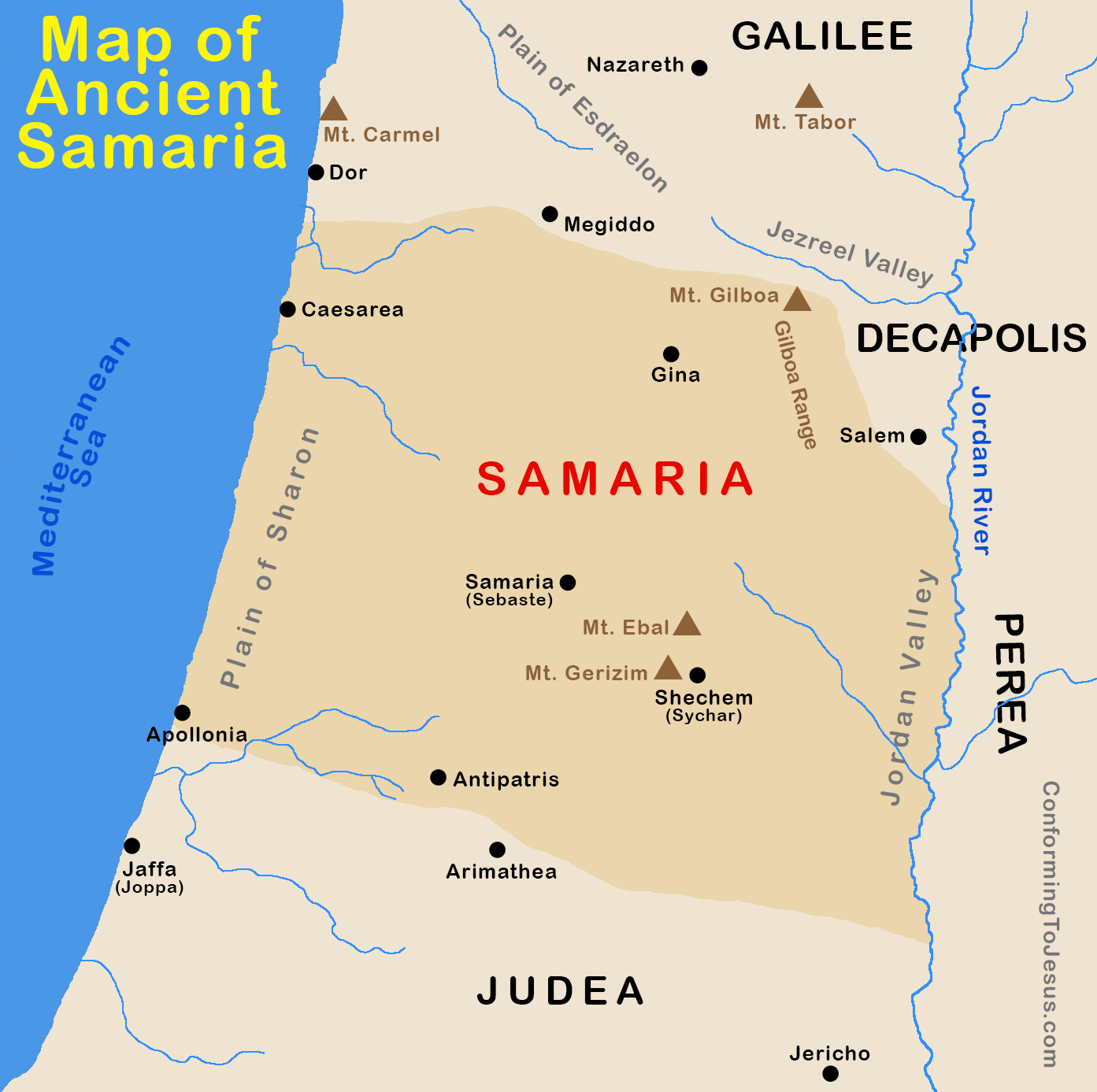
First, I’ll try to put this passage into its proper historical and cultural context. We see that verse 4 says: “Now He [Jesus] had to go through Samaria,” which is quite daring considering the relationship between the Jews and Samaritans at the time. On one hand, the Jews were sort of purebred elitists, being extremely proud of their storied heritage and tight-knit community. On the other, the Samaritans were essentially half-breeds, as they originated from a history of Jewish and Gentile (non-Jewish) interbreeding. Consequently, the Jews viewed the Samaritans with utter contempt and disgust. In fact, the Jews hated the Samaritans so much that in order to get to Galilee (which was where Jesus was going) from Judea, they would rather spend a week traveling around Samaria to the east than take three days to go straight through the region. I mean, just look at this map and appreciate the pettiness of the Jews.
Continuing with this idea, it’s perhaps an even bolder move when in verse 7, Jesus asks the Samaritan woman: “Will you give me a drink?” Hearing this, the woman becomes quite shocked and responds with: “You are a Jew and I am a Samaritan woman. How can you ask me for a drink?” This isn’t particularly difficult to comprehend, as even today, some cultures still regard men as far superior to women. In this context, men weren’t supposed to directly refer to women, so Jesus’ simple request broke numerous cultural norms.
Moving on, Jesus responds to the woman by saying: “If you knew the gift of God and who it is that asks you for a drink, you would have asked him and he would have given you living water.” Just take a moment to put yourself in this woman’s sandals. Here she is, performing her daily routine of fetching water from the local well, when all of a sudden, this weird guy shows up one day and asks her for water. Unfortunately, Jesus isn’t like any other man — in fact, he’s the Son of Man. Jesus holds the keys to eternal blessings, and all the woman has to do to receive them is simply ask.
Yet despite Jesus’ hinting, the woman instead says: “Sir, you have nothing to draw with and the well is deep. Where can you get this living water?” To this, Jesus responds with the most important words from this passage: “Everyone who drinks this water will be thirsty again, but whoever drinks the water I give them will never thirst. Indeed, the water I give them will become in them a spring of water welling up to eternal life.” Here, Jesus describes himself as the “living water” who can provide people with everlasting fulfillment. If you believe in Him, He promises to establish a “spring of water welling up to eternal life” within your heart so that you no longer have to pursuing physical means to quench your thirst.
It’s undeniable that everyone seeks some sort of earthly pleasure to give them satisfaction in life — it could be the approval of others, money, fame, etc. Yet none of that ever satisfies anyone. We hear all the time from the richest people in the world that even after they amassed exorbitant amounts of wealth, they still weren’t satisfied. For those who seek acceptance from others, people could hear 100 compliments and still have trouble sleeping at night because of a lone insult. Trying to find purpose in these secular matters is the equivalent of drinking salt water to satisfy your thirst — it only makes it worse.
In the final part of the passage, the woman makes an honest plea to Jesus: “Sir, give me this water so that I won’t get thirsty and have to keep coming here to draw water.” What makes this request particularly dire is once again the context of this passage. We learned in verse 6 that this interaction took place at noon, which is an odd time for women to be fetching water from the well. Noon is usually the hottest part of the day, so most women either went in the morning or evening. Furthermore, this woman is alone, which is unusual too since women traditionally went in groups to converse with each other and protect themselves (this still happens today).
But everything makes sense when we learn that this woman has had five husbands, and the man she’s currently living with is not even her husband (just imagine what the other women in the town must’ve called this woman). Essentially, she’s an outcast. The Samaritan woman so desperately desires Jesus’ living water because it would remove her burden of having to fetch water every day, which served as a constant reminder of her social status.
I’m reminded of a rather relevant song to this particular discussion, which is All Who are Thirsty by Kutless. The lyrics are:
All who are thirsty
All who are weak
Come to the fountain
Dip your heart in the stream of life
Let the pain and the sorrow
Be washed away
In the waves of His mercy
As deep cries out to deep (we sing)
Come Lord Jesus come
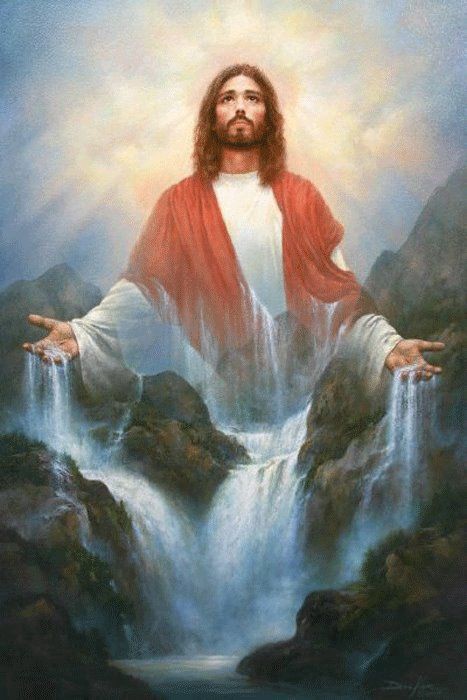
I believe that everyone can relate to this Samaritan woman in a way. We’re all ashamed, insecure, and troubled in some aspect of our lives. When we try to put the pieces of our lives back together through earthly means, we’re always just reminded again of how broken we really are. But as the living water, Jesus takes that burden away from us. He fills us with everything we need and simply calls us to look only toward Him to receive this gift.
So, to end, I’ll pose the same question that Pastor Jimmy posed to the retreat’s attendees: what are you thirsty for?